


There has been way too much arguing over the hypothetical little girl in India comment that appeared on Jenny Kile's Mysterious Writings.

So, let's try to look both logically and imaginatively at this problem, okay?
First, let's look at what was said:
Jenny: Your treasure hunt has inspired people worldwide to discover history, culture and nature, but many people, (even in the US) might be deterred because they don’t live near the Rockies or can’t afford to travel. Should they be deterred? Can a little girl in India, who speaks good English, but only has your poem and a map of the US Rocky Mountains, work out where the treasure is? And would she be confident as she solves each clue, or only confident when she has solved them all?
Forrest: I wish I had another treasure to hide in the Appalachians. The little girl in India cannot get closer than the first two clues. There are many disabled people who are deeply into maps and geography, and they are having a lot of fun.

First of all, Forrest doesn't really answer Jenny's question. He does infer that there are barriers that will prevent many people from actually getting to the Rocky Mountains to RETRIEVE the chest.
People on my side of the country are deterred by finances, transportation, responsibilities at home, and the time it would take to journey across the country to pick up a treasure even AFTER they had solved the poem. For some people, even after they've solved the poem, going to retrieve it may be nearly as impossible as it would be for the little girl in India to make an ocean voyage to the US to pick it up. Maybe that's why Forrest said he wished he had another treasure to hide in the Appalachians.
A little girl in India would have a much harder time finding the resources (money, time, a parent that believed her) needed to MAKE A TRIP to the US to RETRIEVE the treasure.
And dang it, this little girl was READY with her pail, UGGS, and bucket. Stupid ocean.

The key words in Forrest's response are "GET CLOSER." Notice he did not say the little girl couldn't solve the clues. He said she couldn't GET CLOSER to them.
If the first two clues are non-physical places or ideas, and the rest of the clues are physical spots in the Rocky Mountains, of course she can't get closer.
For example, if the first two clues are Forrest's memories (alone in there), and "mother," (I'm not saying these are the first two clues, but using them as examples), and the next clues are all physical locations you can actually travel to, a little girl in India can't get any closer than the first two non-physical clues.
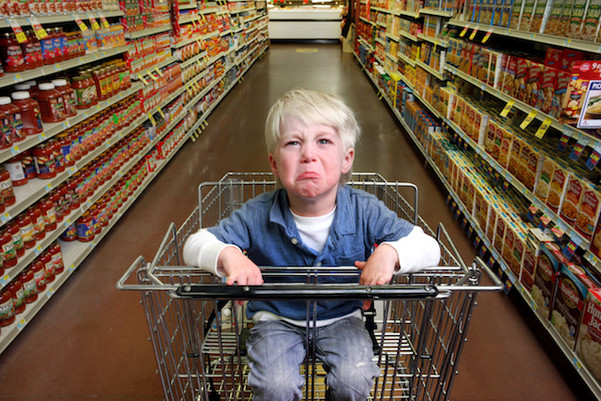
Just like if the clues in the poem were in a grocery store. Oh, how ridiculous, right? However, say you're on a treasure hunt in a grocery store. You've solved the first two clues. You've made it to the candy isle, and the prize is the eggplant in the produce section. So, when you come out of the candy isle...wait, what?! There's a GIANT FREAKING OCEAN blocking you from the produce isle, and you can't get any closer to laying your hands on that golden eggplant. DARN IT!
Forrest further reiterates the problem of barriers by mentioning the disabled people. He didn't say disabled people can't SOLVE the poem. He didn't say the little girl can't SOLVE the poem. He's implying that disabled people and the little girl in India may not be able to GET CLOSE to the chest, due to terrain, or whatever. But they can certainly enjoy the fun the chase presents by SOLVING the poem. Solving a clue is not synonymous with getting closer to a clue!
Everyone seems to ignore Forrest's specific, and often literal, way of speaking. Maybe that's where my Asperger's gives me an advantage. Get closer means to physically get closer. It doesn't mean I need BOTG to SOLVE the poem, but of course, everyone needs BOTG to RETRIEVE it. That's how seemingly conflicting statements are resolved.
Forrest didn't contradict himself with the little girl in India, going with confidence, and saying "No, no you can't," when asked if you can get the treasure chest from home (I couldn't find this exact quote, so if someone knows the exact quote where F answers "No, no you can't," please leave it in the comments). Of course you can't, because you're home, and the treasure is in the Rocky Mountains! Never does he say the poem can't be SOLVED at home. The problem is you can't RETRIEVE it from home. You have to get in your car and physically go to the location of the treasure, put your hands on it, lift it, and carry it away.
Secondly, remember this question and answer from Jenny's site? It's from ChaseChat's very own know-it-all, mdavis19! Which is funny, because he mentioned this quote just yesterday, that no specialized knowledge is needed. What he failed to mention is the second part of Forrest's answer!
mdavis19: Is any specialized knowledge required to find the treasure? For instance, something learned during your time in the military, or from a lifetime of fly fishing? Or do you really expect any ordinary average person without your background to be able to correctly interpret the clues in the poem?
Forrest: No specialized knowledge is required mdavis19, and I have no expectations. My Thrill of the Chase book is enough to lead an average person to the treasure.f
So, the little girl in India, besides having the barrier of a giant ocean preventing her from laying her hands on the chest, is also missing one key material: FORREST'S MEMOIR, THE THRILL OF THE CHASE. Remember, all she has is the poem and a map of the Rocky Mountains, which we don't really know if that's what constitutes a "good" map or the "right" map. In the above answer, Forrest pretty clearly says the BOOK IS ENOUGH to lead the average person to the treasure.

So, to me, there's no confusion regarding the little girl in India. Logic and a little imagination make Forrest's words pretty clear and straightforward. Like he's said all along.
In other news, James is coming for another weekend on June 8th! Woohoo!! :)


Wow, awesome problem solving in your wrap up of that puzzle. Nicely done! See ya soon 😍